
Energy
The word 'chakra' comes from Sanskrit and means wheel or vortex. In the Hindu and yogic traditions, chakras are centers of subtle energy distributed along the spine. When they flow freely, you feel balance, vitality and clarity. When one is blocked or in excess, it manifests, sometimes in the body, often in emotions or behaviors. Understanding your chakras means learning to listen to your body differently.
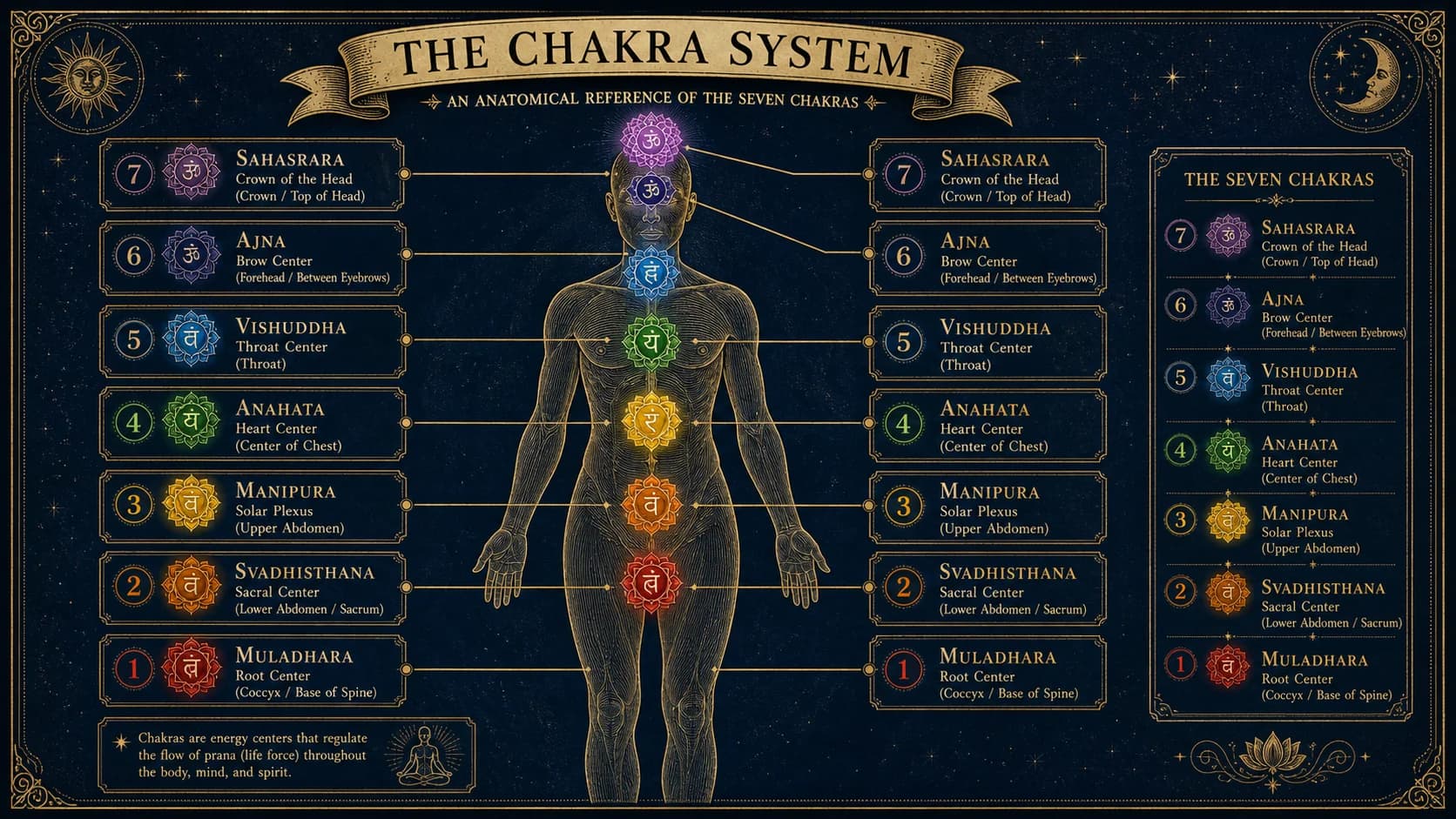
The Root chakra (Muladhara, red, at the base of the spine) governs security, grounding and survival. The Sacral chakra (Svadhisthana, orange, below the navel) carries creativity, sexuality and emotions. The Solar Plexus (Manipura, yellow, at the stomach level) is the center of personal power and self-confidence. The Heart chakra (Anahata, green, at the center of the chest) governs love, compassion and relationships. The Throat chakra (Vishuddha, blue, at the throat) manages authentic expression and communication. The Third Eye (Ajna, indigo, between the eyebrows) is the seat of intuition and inner vision. The Crown (Sahasrara, violet or white, at the top of the skull) connects to universal consciousness and spirituality.
A disturbed Root chakra can manifest as chronic anxiety, a feeling of instability or lower back problems. A closed Heart chakra often translates into difficulty receiving love or a tendency to isolation. To rebalance: mindfulness practices, yoga, sound meditation, the use of associated stones (red jasper for the Root, rose quartz for the Heart) or simply paying attention to the corresponding body area can gradually reopen the flow.
How do you know which chakra is blocked?
Observe where your recurring difficulties concentrate. Communication problems or a tight throat? Throat chakra. Difficulty believing in yourself or paralyzing perfectionism? Solar Plexus. Relational blocks or fear of loving? Heart chakra. The body often gives physical clues that correspond to the chakra concerned.
Are chakras visible or scientifically measurable?
To date, chakras have no scientifically validated anatomical correlate. It is a knowledge system from millennia-old spiritual traditions. Many integrative medicine practitioners use them as a symbolic map of the body-mind, not to replace medical care, but as a complement to self-understanding.
Can you work with your chakras yourself without a practitioner?
Yes. Guided chakra meditation, yoga (each posture activates specific areas), conscious breathing, mantras and the use of crystals are all approaches accessible on your own. For deep work or persistent blocks, accompaniment with an energy practitioner can be valuable.
Take the next step
Guidance for today
Receive My Message